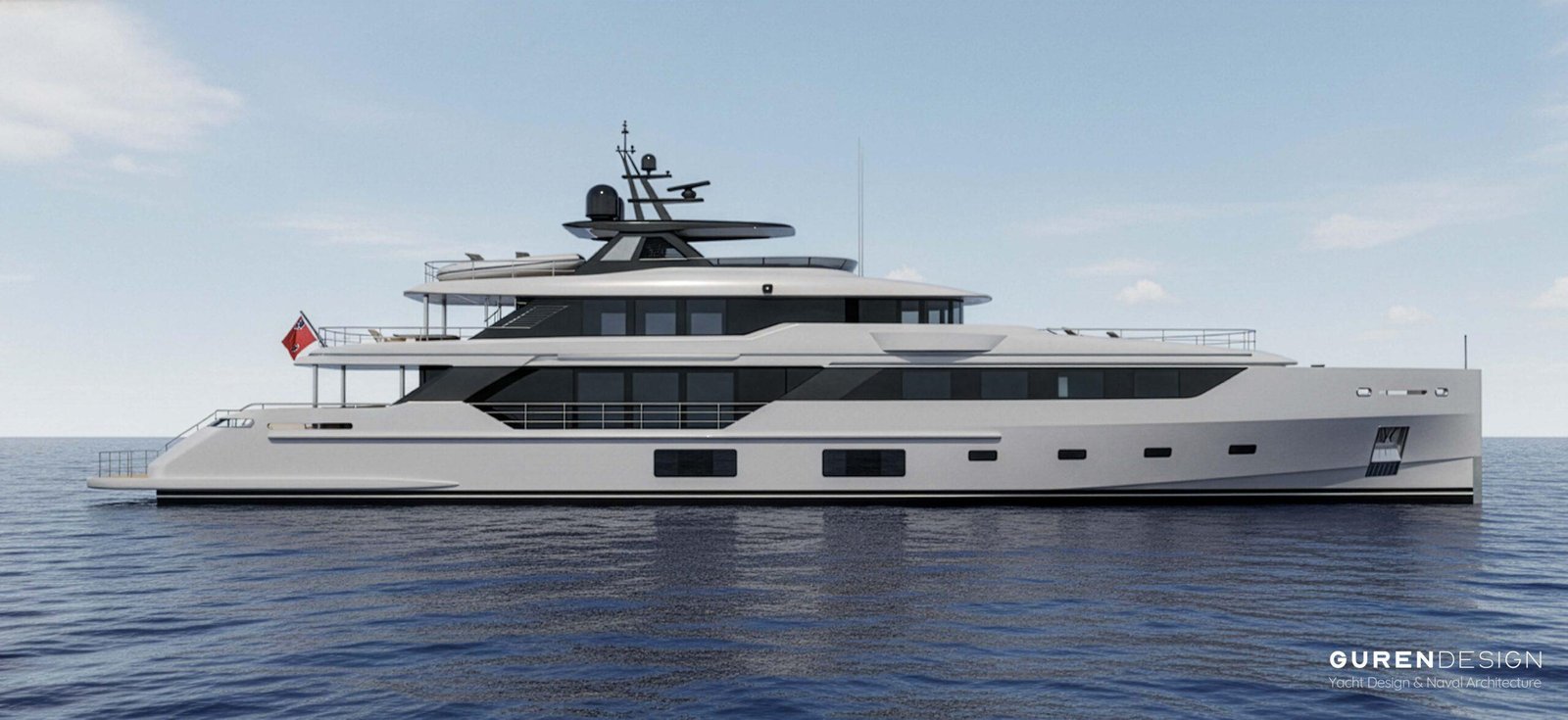
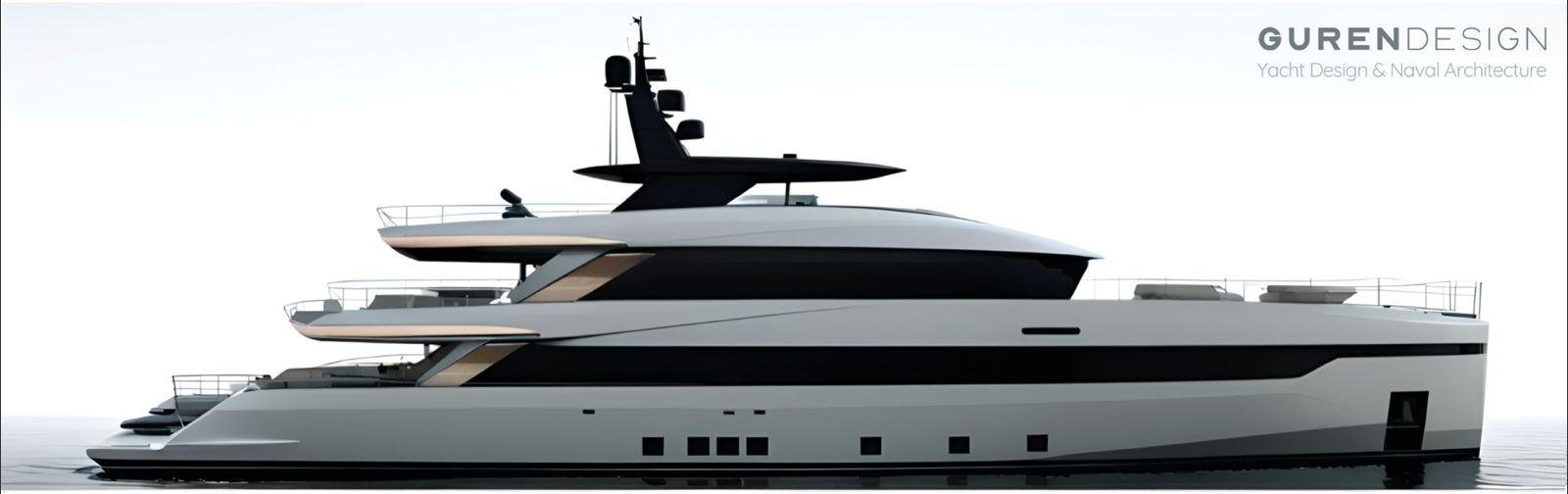
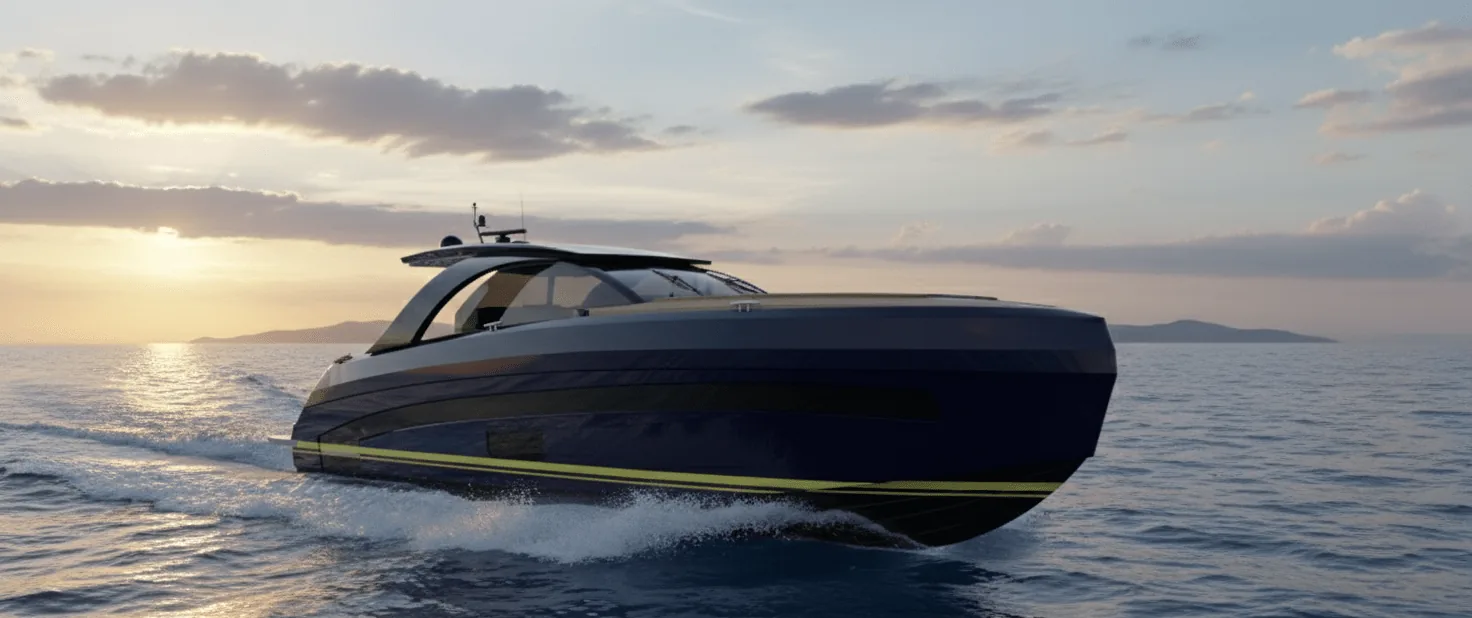
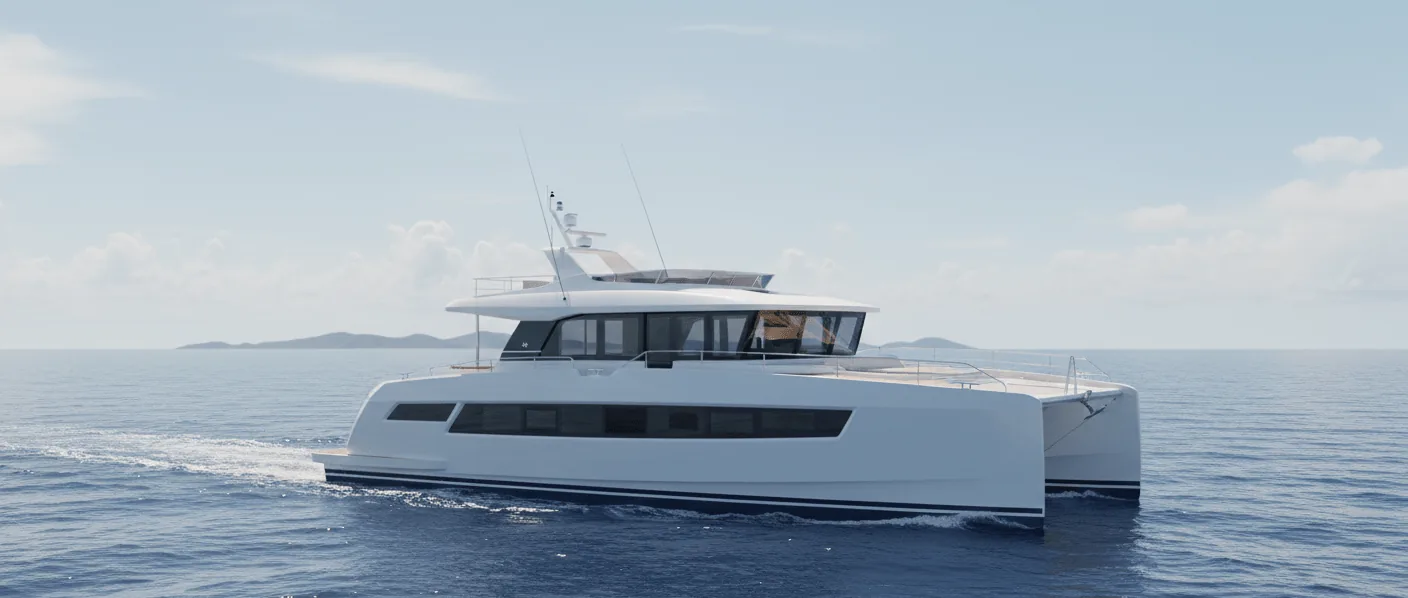
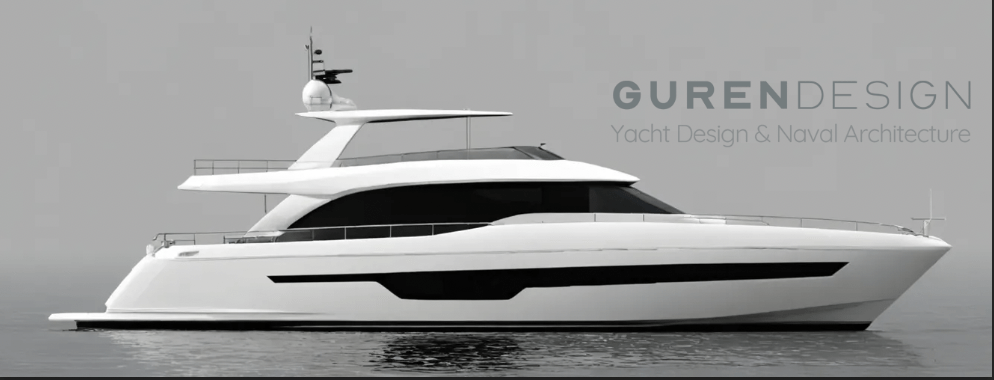
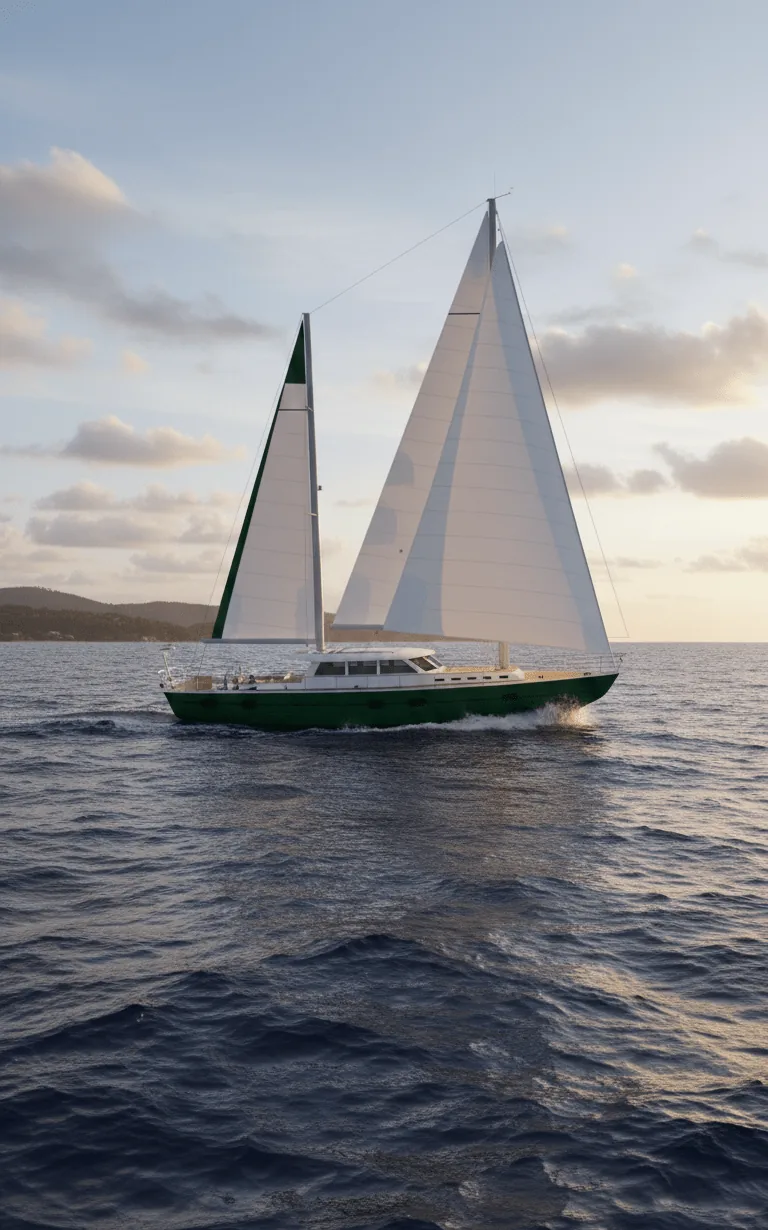
Based in Istanbul, Turkey, GUREN Design draws the exterior of motor yachts, superyachts, gulets and high-performance powerboats — hull profile, superstructure and deck geometry — from first principles, so that every surface answers to both physics and proportion.
Exterior design defines how a yacht looks and how its outside spaces work: the hull profile and sheer line, the superstructure volumes and glazing, the deck layout and the way people move between levels. On a motor yacht these decisions also set the vessel's weight, windage and centre of gravity, so they cannot be separated from the engineering.
Our exterior work ranges from production powerboats and superyacht tenders to 50-metre private motor yachts. The aim on every commission is a form that is contemporary without chasing trends — as relevant in twenty years as it is at launch.
Because GUREN is also a naval architecture studio, every exterior line is checked against stability, weight and resistance as it is drawn. A superstructure that looks right but raises the centre of gravity, or a hull profile that fights the waterline, is caught at concept stage — when the drawing is still the cheapest thing to change.
Owners and shipyards can commission exterior design on its own, or together with naval architecture as a single package.
A commission starts with a brief meeting, in Istanbul or remotely, to set operational requirements, scale and aesthetic direction. Concept sketches follow, then development of the chosen direction into drawings a yard can price and build. We stay with the project through construction to answer builder queries and defend the design to delivery.
Our projects range from production powerboats and 7-metre tenders to 50-metre motor yachts, and the studio takes commissions up to 60 metres.
Yes. Exterior design can be commissioned on its own or combined with naval architecture as one package.
Yes. The studio operates from Istanbul and London, and briefs can be held in Istanbul or remotely. Projects to date span four countries.
As early as possible. Changes cost least at concept stage, before a yard has priced the vessel.