Engineering Services
ISO 12215-5 scantlings and composite laminate plans
Calculated to the standard. Drawn for the laminating shop.
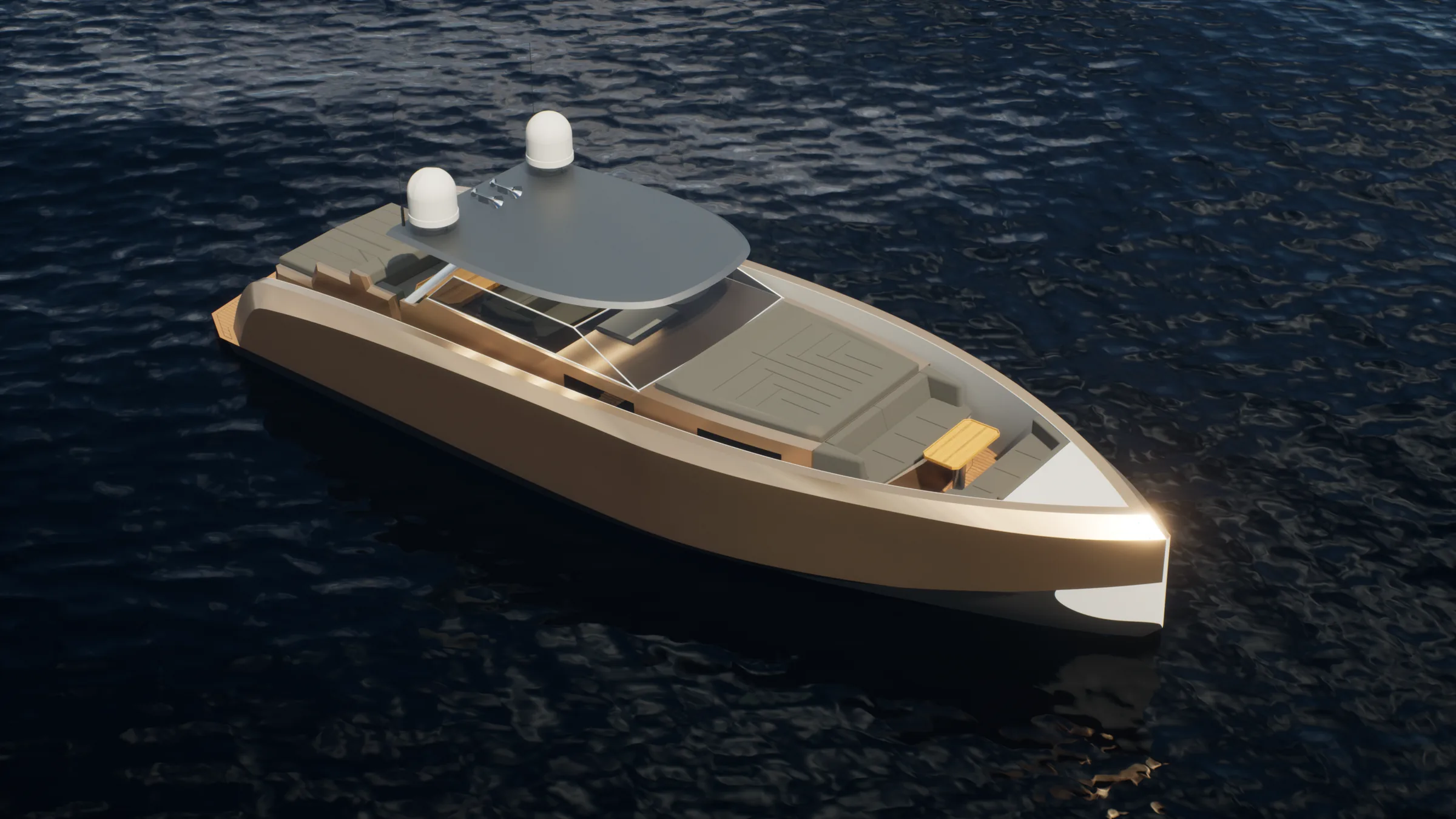
We calculate hull, deck and superstructure scantlings to ISO 12215-5:2019 and turn the result into laminate plans a yard can laminate from: ply-by-ply schedules, core layouts, reinforcements and a report your notified body can review.
The work is done by naval architects who also design boats, so the structure is set against weight, centre of gravity and performance, not checked in isolation. We are material-independent: the laminate is specified for your boat and your building process, using the fibres, cores and resin systems your yard already qualifies and buys.
What ISO 12215-5 covers
ISO 12215-5 sets the design pressures, design stresses and scantling requirements for the hull, deck and superstructure of monohull small craft. It applies to boats with a hull length (LH) from 2.5 m to 24 m and covers fibre-reinforced plastics in single-skin and sandwich construction, as well as aluminium, steel and wood.
Design pressures depend on the boat's design category (A, B, C or D), its loaded displacement, speed and the location of each panel: bottom, side, deck, superstructure and bulkheads. Each plate panel and stiffener is then checked for minimum thickness, bending and shear.
- Part 1 — materials: thermosetting resins, glass-fibre reinforcement and the reference laminate
- Part 5 — design pressures, design stresses and scantling determination for monohulls
- Part 6 — structural arrangements and details
- Part 7 — scantling determination for multihulls
- Part 8 — rudders; Part 9 — sailing craft appendages
From calculation to laminate plan
A compliant calculation is only half the job. The laminating shop needs to know which ply goes where, in which direction and in which order. We translate the scantlings into laminate drawings: zones and ply drops, overlaps, core joints and chamfers, local reinforcements under deck hardware, chainplates, engine beds and shafts, and the stiffener layout with their own laminate stacks.
Because the plan is drawn for your process — hand lay-up, vacuum bagging or resin infusion — fibre weights, core densities and resin content are realistic for what the shop actually produces.
CE marking and approval
For recreational craft placed on the EU market, the structural requirements of the Recreational Craft Directive are commonly demonstrated using the EN ISO 12215 series. Our report sets out the inputs, design category, pressures, material properties and panel-by-panel results in a form a notified body can follow, and we answer its comments until the file is closed.
Boats outside that scope — workboats, passenger craft or yachts above 24 m — follow flag or class society rules instead. We prepare structural calculations and laminate plans to the applicable rules (for example BV, DNV or LR) for those projects.
Why an independent naval architect
Laminate engineering is often bundled with the purchase of a particular material. We work the other way around: the structure is designed for the boat first, then specified in materials your yard can source, store and laminate reliably. Where a yard prefers a specific supplier's products, we use that supplier's mechanical data in the same calculation.
The result is a structure you can compare, re-quote and build with any qualified supplier — and a design team in Istanbul that can visit the yard, review the first laminates and adjust the plan when production teaches us something.
What we deliver
- Scantling calculation report to ISO 12215-5:2019 for hull, deck and superstructure
- Laminate schedule / ply book: every ply, fibre weight, orientation and sequence
- Laminate plan drawings with zones, ply drops, overlaps, core layout and local reinforcements
- Stiffener and bulkhead layout with their laminate stacks
- Laminate weight estimate and material quantity list for procurement
Typical inputs we need
- Lines plan or 3D hull surface, and general arrangement
- Design category, loaded displacement (mLDC) and maximum speed
- Intended building process and preferred materials, if any
- Deck hardware, engine and appendage loads to be reinforced
Questions
Do we have to use a particular fibre, core or resin brand?
No. We specify the laminate by properties and fibre weights, so you can source from any qualified supplier. If you already work with one brand, we use its data sheets in the calculation.
Can you check an existing laminate plan?
Yes. We review an existing schedule against ISO 12215-5, show which panels pass or fail, and propose the lightest changes that make it compliant.
Do you calculate sandwich and infused laminates?
Yes. Single-skin and sandwich (foam, balsa or other cores) are both covered, and the plan is drawn for hand lay-up, vacuum bagging or resin infusion as your yard builds.
What about boats over 24 metres or commercial craft?
ISO 12215-5 stops at 24 m hull length and is aimed at recreational craft. For larger yachts and commercial vessels we work to the applicable class or flag rules.